By Loyd Pearson, Loyd’s Mobile Mechanic. Posted November 11, 2026. Updated November 11, 2026.
Author Source EEAT Authors · Loyd's Author Page
The normal low in Tulsa on November 11 is 41°F, per the National Weather Service. Ram’s owner’s manual says that below 50°F, the transmission dipstick may not give a reading at all. So the classic Saturday morning fluid check in the driveway is the wrong time to do it this month.
Transmission fluid has to be checked at the temperature your car’s maker names. Get that part wrong and the stick lies to you.
Where It Lands
To check the fluid level, park on level ground, warm the transmission to the temperature in your manual, then follow that manual on engine running or off, and which gear. Read the hot marks when the fluid is hot. A lot of newer cars have no dipstick, and those get checked at a plug with a scan tool reading the fluid temperature. Low fluid almost always means a leak, so a top off is a clue, not a fix.
- Tulsa’s normal November low is 39.4°F. A car that sat overnight starts near that.
- Ram’s 6 speed wants the fluid at 158 to 176°F, which takes at least 15 miles of driving.
- A five minute idle won’t get there. One trade test took about 40 minutes of idling to reach 180°F.
- Many sealed transmissions are read cooler, between 68 and 130°F, and some can’t be read right above 104°F.
- Quaker State says a car shouldn’t lose fluid in normal use. Low usually means a leak.
Want more Tulsa car guides near the top of your Google results? Pick us as a source and they show up first.
Add Loyd’s Mobile Mechanic as a preferred source on GoogleWhy a Cold Tulsa Morning Throws the Reading Off
Fluid grows when it heats up. The marks on a dipstick are set for that.
The National Weather Service puts Tulsa’s normal November low at 39.4°F, with the daily normal sliding from 45°F on November 1 to 35°F on November 30. A car parked outside all night has fluid close to that air temperature when you walk out to it.
Ram’s manual for its 6 speed automatic is plain about what that means. Below 50°F, the dipstick may not show a reading, and you shouldn’t add fluid until it warms up. So if you pull the stick on a cold morning and see little or nothing, don’t pour in a quart. You may be looking at cold fluid that’s right where it should be.
The other mistake is the opposite one. Plenty of how to pages say to idle the engine about five minutes first. O’Reilly says that, and also says to know the exact temperature your service manual calls for. Those two don’t line up on a cold day.
John Kelly, who has taught automatic transmission classes for 22 years, tested it for Vehicle Service Pros. On a front wheel drive car, the fluid took about 40 minutes of idling to reach 180°F. On a rear wheel drive car with no electric fan, it only hit 150°F after an hour. Five minutes in a Tulsa driveway in November is nowhere close.
That’s why Ram’s steps say to drive. At least 15 miles gets its transmission to the 158 to 176°F range, which the manual says is too hot to hold between your fingertips.
How to Check Transmission Fluid With a Dipstick
Read your owner’s manual first. Quaker State notes some automatics are checked with the engine off, and the manual is where you find out which kind you have.
For a dipstick car checked with the engine running, Ram’s steps are a clean model to follow.
1. Get it hot. Drive at least 15 miles. In Tulsa this month, do the check right after a real trip, not after a warm up in the driveway.
2. Park level. A slope tilts the fluid and moves the reading. O’Reilly says the same.
3. Idle at least 60 seconds. Leave it running for the rest of the check. Set the parking brake and hold the brake pedal.
4. Run through the gears. Move the shifter into each position for a moment so the transmission fully engages, then end in Park. Some cars want Neutral instead, per O’Reilly, so go by your manual.
5. Pull, wipe, push in, pull again. Push the stick all the way until it seats. Ram says the reading only counts if both sides of the blade have a solid coat of fluid.
6. Read the hot marks. Hot fluid should land between the HOT marks. The COLD marks are only a rough guide, and Ram says to use them only for setting the level after a fluid service, then recheck hot.
7. Add slowly, if it’s low. Use only the fluid your manual names, through the dipstick tube with a long funnel. Ram says to wait at least two minutes after adding before you check again. Don’t overfill.
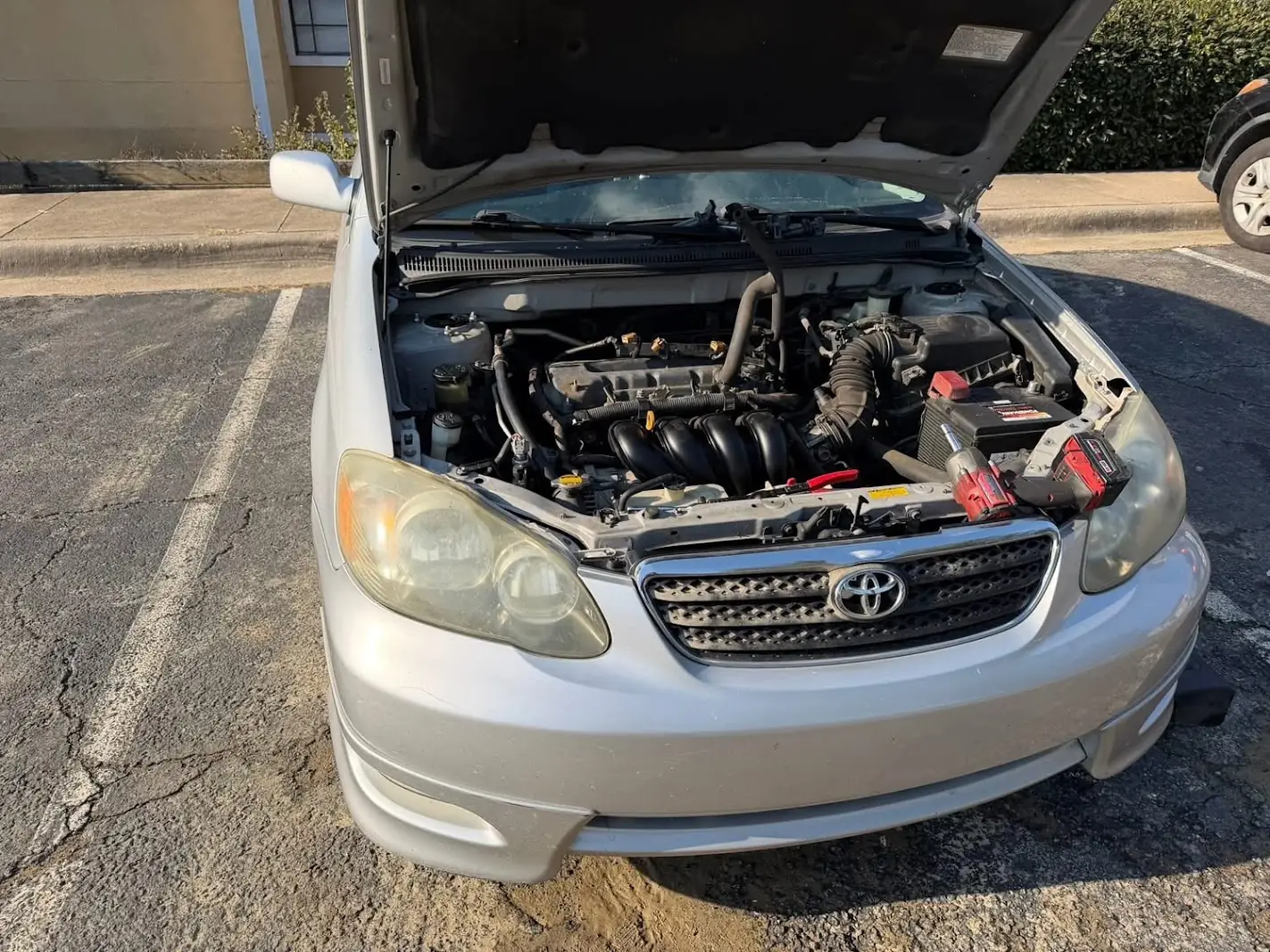
No Dipstick Under the Hood
Plenty of newer cars don’t have one.
O’Reilly says some late model cars ship without one, and that cars without a factory dipstick are usually treated as non serviceable outside a shop or dealer. That doesn’t mean the fluid never needs a look. Kelly puts the word lifetime in quotes for a reason. The fluid still needs a check after a leak, a problem or any time the unit gets opened.
These get checked at a plug on the side or bottom of the case, with the car level and the fluid at a set temperature. The temperature is the hard part, because you can’t feel it through a plug. Kelly says the factory steps start with a scan tool that reads fluid temperature.
| Transmission | Fluid Temperature to Check | Where You Read It |
|---|---|---|
| Ram 6 speed, 2022 2500 and 3500 | 158 to 176°F, after 15 or more miles | Between the HOT holes on the dipstick, engine running, in Park |
| Toyota 6 speed front wheel drive, 2007 and up | 104 to 113°F, read on a scan tool | At the drain plug and standpipe, engine running |
| Toyota AB60E and AB60F | 115 to 133°F | At the check plug in the oil pan, with a special tool |
| GM 4T45 E, like a 2002 Cavalier | Not above 104°F | At a check plug on the right side, a few inches above the pan |
Look at the spread. One car wants its fluid near 170°F. Another can’t be read right past 104°F, because the fluid swells, looks overfull and spills out of the hole. Kelly says that leaves the real level too low once it cools.
O’Reilly’s fix for a missing stick is to buy a universal one and mark your own fill line. I wouldn’t guess at a mark. Kelly notes a universal stick has a ruler marked every 10 mm, and that only helps when you have the factory chart that says what number is full at what temperature.
And on a Toyota, National Oil and Lube News says the factory procedure can take up to 20 minutes, with equipment that costs over $1,000. That’s why I’d leave a sealed unit to someone with the scan tool and the chart.
What the Level Tells You, and What It Doesn’t
Low fluid is a symptom. Find out why.
Quaker State says a car shouldn’t lose automatic transmission fluid in normal use, so a low level likely means a leak. Topping off buys time. It doesn’t find the drip.
While the stick is out, look at the fluid too. O’Reilly lists dark red or brown color, a slight burning smell and metal shavings as signs the fluid needs attention. It also says burnt fluid is usually caused by a problem inside the transmission, and a flush often isn’t enough to save it at that point.
Too much is a problem as well. Kelly warns that some transmissions are touchy enough that even a slight overfill or underfill can cause trouble. So add a little, wait, and read it again.
O’Reilly gives 50,000 to 100,000 miles as a general range for checking and replacing the fluid. Your manual’s number wins over that.
Seeing a red spot on the driveway is a good time to check, once the car is hot. It pairs well with the rest of the Tulsa winter car checklist. If the shift feels off, the guide to Tulsa transmission shops covers what to ask before anyone quotes you a rebuild.
Not sure what you’re reading, or found a puddle? Call or text Loyd at (918) 215-1206. We come to the car and pull the codes, and on an oil change we take a quick look at the other fluids while we’re under the hood.
Mailbag
How do I check the fluid level?
Warm the transmission to the temperature in your manual, park level, and follow the manual on engine on or off and which gear. Pull the dipstick, wipe it, seat it, pull it again and read the HOT marks. No dipstick means a plug check with a scan tool.
Do you check transmission fluid hot or cold?
Hot, on most dipstick cars. Ram calls its COLD marks a rough guide for use after a fluid service only. Some sealed units are read cooler, between 68 and 130°F, so your manual decides.
Do you check transmission fluid in Park or Neutral?
Ram’s steps end in Park, after a stop in each gear. Quaker State and O’Reilly say Park or Neutral, depending on the car. Your manual settles it.
How do you read an ATF dipstick?
Both sides of the blade need a solid coat of fluid for the reading to count. On a hot transmission the level should sit between the HOT marks. If a mark is a hole, a level at or above it fills the hole.
Can I add transmission fluid myself?
On a dipstick car, yes. Use only the fluid your manual names, add a little through the tube, wait two minutes and recheck. Don’t overfill. On a sealed unit, the fill is tied to a temperature you can’t feel, so I’d leave that one to a pro.
Why does my dipstick show almost nothing on a cold morning?
Cold fluid shrinks, and Ram says its stick may not read below 50°F. Tulsa’s normal low on November 11 is 41°F. Drive the car first, then check.
Is it bad if my transmission fluid is low?
It’s a sign something is off. Quaker State says a car shouldn’t lose fluid in normal use, so look for a leak and get it found before it turns into slipping or hard shifts.
Also See
Engine diagnostics where your car is parked
Oil changes at your home or work
AAMCO vs independent shops for Tulsa transmission work
Questions we get asked
A red puddle, a slow shift or a stick you can’t read? Call or text Loyd at (918) 215-1206. We come to you in Tulsa, Sapulpa, Kiefer, Sand Springs, Jenks, Kellyville, Glenpool and Lotsee.
Receipts
National Weather Service Tulsa, November Climate Normals 1991 to 2020
Ram 2022 2500 and 3500 Owner’s Manual, Fluid Level Check, 6 Speed Transmission
John Kelly, Automatic Transmission Servicing, Vehicle Service Pros, January 1, 2020
Lenny Saucier, No Dipsticks Allowed, National Oil and Lube News, February 1, 2019
Quaker State, 6 Easy Steps on How to Check Your Transmission Fluid
O’Reilly Auto Parts, How to Check Transmission Fluid Without a Dipstick