By Loyd Pearson, Loyd’s Mobile Mechanic. Posted November 15, 2026. Updated November 15, 2026.
Author Source EEAT Authors · Loyd's Author Page
61 percent of the major roads in the Tulsa urban area are in poor or mediocre shape, per TRIP’s April 2025 report. TRIP puts the extra wear and repair cost from those roads at $1,072 per driver per year. So when a car here starts to shake at highway speed, I look at the wheels and tires before anything else.
Most highway shakes come from something round that isn’t turning true anymore. The speed where it starts and the place you feel it tell you which one.
Where It Lands
A shake that shows up above about 45 mph and comes through the steering wheel usually points to a front tire or wheel, either out of balance, out of round or bent. Felt in the seat or floor, it points to the rear. A shake that only comes on when you press the gas points to a worn axle joint or a mount. A shake that follows engine speed, not road speed, is an engine problem. If the shake started right after tire work, check the lug nuts before you drive another mile.
- MOTOR magazine says shakes below 45 mph most likely come from the driveshaft, and shakes above 45 mph are usually a tire or an axle shaft.
- A retired tire engineer notes that suspensions are built so wheel hop lands around 50 to 70 mph. That’s the band where a small imbalance gets loud.
- One ounce of extra rubber on a 30 inch tire is enough to throw it out of balance.
- AAA found 1 in 10 drivers needed a repair after a pothole in 2021, at almost $600 a repair.
- Loose lug nuts can wobble the wheel, and in the worst case the wheel can come off, per Continental.
Want more Tulsa car guides near the top of your Google results? Pick us as a source and they show up first.
Add Loyd’s Mobile Mechanic as a preferred source on GoogleRead the Speed Before Anything Else
The speedometer is your first tool. Note the speed where the shake starts and the speed where it fades.
MOTOR magazine, a trade magazine for techs, splits it at 45 mph. Below that, a shake most likely comes from the driveshaft, the long shaft that turns the rear wheels on trucks and rear drive cars. Above 45 mph, it’s usually a tire or a half shaft, the short axle that drives a front wheel.
There’s a reason so many shakes show up right at highway speed. Barry, a retired tire engineer who writes Barry’s Tire Tech, explains that suspensions are designed so wheel hop happens around 50 to 70 mph. An out of balance or out of round tire in that band can start a shake the car doesn’t damp out. That’s why a car can feel smooth at 40 and buzz the wheel at 62.
Next, notice where you feel it.
MOTOR says a shake in the steering wheel points to a front tire, because it travels up through the steering parts. A shake in the seat or the floor with a calm steering wheel pointed to a rear tire in their SUV example. Barry adds that the left front is the spot a driver feels most, and the right rear the least.
| What You Feel | Where It Points | First Thing to Check |
|---|---|---|
| Steering wheel shakes above about 45 mph | A front tire or wheel | Missing wheel weight, a bent rim, a bulge in the tire |
| Seat or floor shakes, wheel stays calm | A rear tire or wheel | Same checks, on the back wheels |
| Shake below 45 mph on a truck or rear drive car | The driveshaft | Missing balance weights, dents, worn U joints |
| Shakes only when you press the gas | An inner axle joint, or an engine or transmission mount | Mounts first, then play in the axle joints |
| Follows engine speed, even parked | The engine or a belt driven part | A misfire, the mounts, the belt pulleys |
| Started right after tire work | Lug nuts or a wheel not seated right | Lug nut torque, today |
One thing the table leaves out. A shake you only feel when you hit the brakes is a brake problem, not a tire or axle one, and it gets its own check.
Why the Wheels Come First on Tulsa Roads
Rough roads knock wheels out of true. That’s the whole local angle, and it’s a big one.
TRIP’s April 2025 report says 61 percent of the Tulsa area’s major roads are poor or mediocre, against 48 percent statewide. Its $1,072 per driver figure covers faster wear, extra repairs, fuel and tire wear. AAA’s 2022 pothole study found 1 in 10 drivers needed a repair after hitting one in 2021, at almost $600 each, and named tires, wheels and suspension as the parts that take the hit.
A hard hit can do three things a shake will tell you about.
It knocks off a wheel weight. Barry’s math shows how little it takes. One ounce of extra rubber on a 30 inch tire throws it off, and fixing that at a 15 inch rim takes two ounces of weight. A lost stick on weight can be enough to feel.
It bends the rim. Barry’s rule of thumb is that 0.001 inch of runout makes about one pound of force variation. A rim bent a few thousandths can shake a sensitive car on its own.
It damages the tire inside. A broken belt or a bulge makes the tire out of round, and no amount of balance weight fixes that.
Barry gives an example of how this fools people. A car that can tolerate 6 pounds of force variation gets tires that add 2 pounds, and the total tips over the limit. New tires seem to help, so the tires take the blame. His advice is that if changing tires doesn’t fix it, check the rims next. I agree with him. On Tulsa roads I’d check the rims first.
Checks You Can Do in the Driveway
None of these need tools beyond a flashlight. Park on level ground with the parking brake set.
1. Look at every wheel for a missing weight. Weights are small metal pieces clipped to the rim edge or stuck to the inside of the rim. A clean, bright patch or a strip of leftover tape where one used to be is a good clue.
2. Look at the rim lip. A flat spot or a dent on the edge, often on the inside where you can’t see it from the curb, means a bent wheel.
3. Run your eyes around each tire. A bulge on the sidewall or a lump in the tread is the inside of the tire breaking. Don’t drive on the highway with that.
4. Think back to the last tire job. Continental says lug nuts can lose clamping force as the wheel settles, and it calls for a torque check after the first 50 kilometers, about 30 miles. Loose nuts can cause wobble and shake, and in the worst case the wheel can come off.
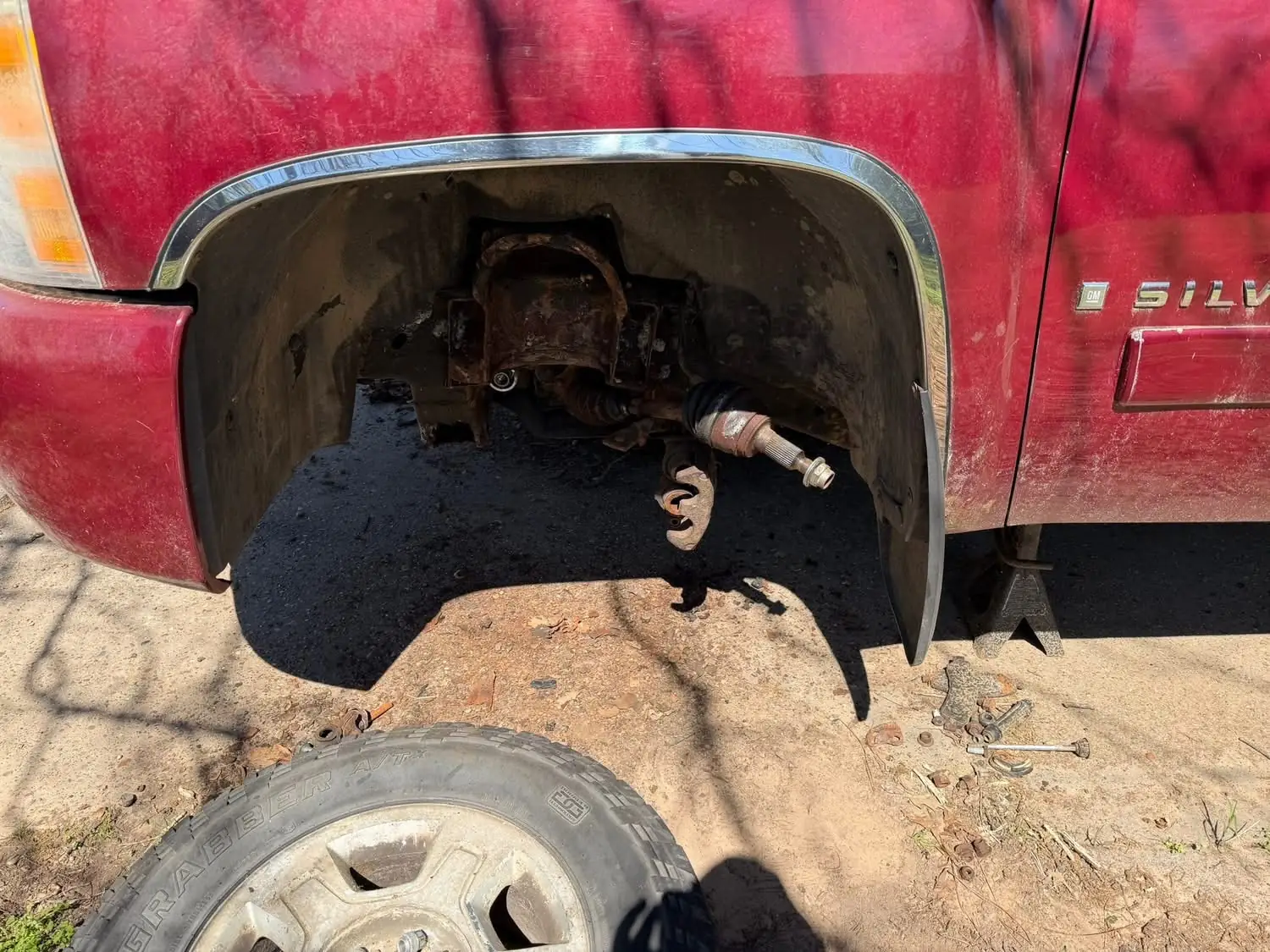
5. Look behind the front wheels for a torn rubber boot. The boot covers the axle joint. Mike Mavrigian, writing for Vehicle Service Pros, calls a torn boot the most common cause of axle joint failure. Grease slung around the inside of the wheel well is a sign.
6. Write down three things on your next drive. The speed it starts, where you feel it, and whether it changes when you lift off the gas. Mavrigian says a shake under acceleration may point to a worn inner joint, while one that starts at a set speed and grows with speed is more likely a tire or wheel.
What a Mechanic Checks Next
A good shake diagnosis starts with a drive, not a parts order.
Jerry Stewart, writing in Gears Magazine, tells techs to confirm the exact complaint first, then match the shake to its source. Engine speed in rpm divided by 60 gives the engine’s frequency in hertz. If the shake matches that number, it’s engine side. If it matches tire speed, it’s the wheels. MOTOR uses the same math with the transmission output speed, because a slipping torque converter throws off engine rpm.
For the wheels, a standard balance catches missing weight. When the shake survives a balance, a road force machine presses a roller against the spinning tire to find the out of round one. Barry says those machines are best at finding the problem wheel and tire on a car.
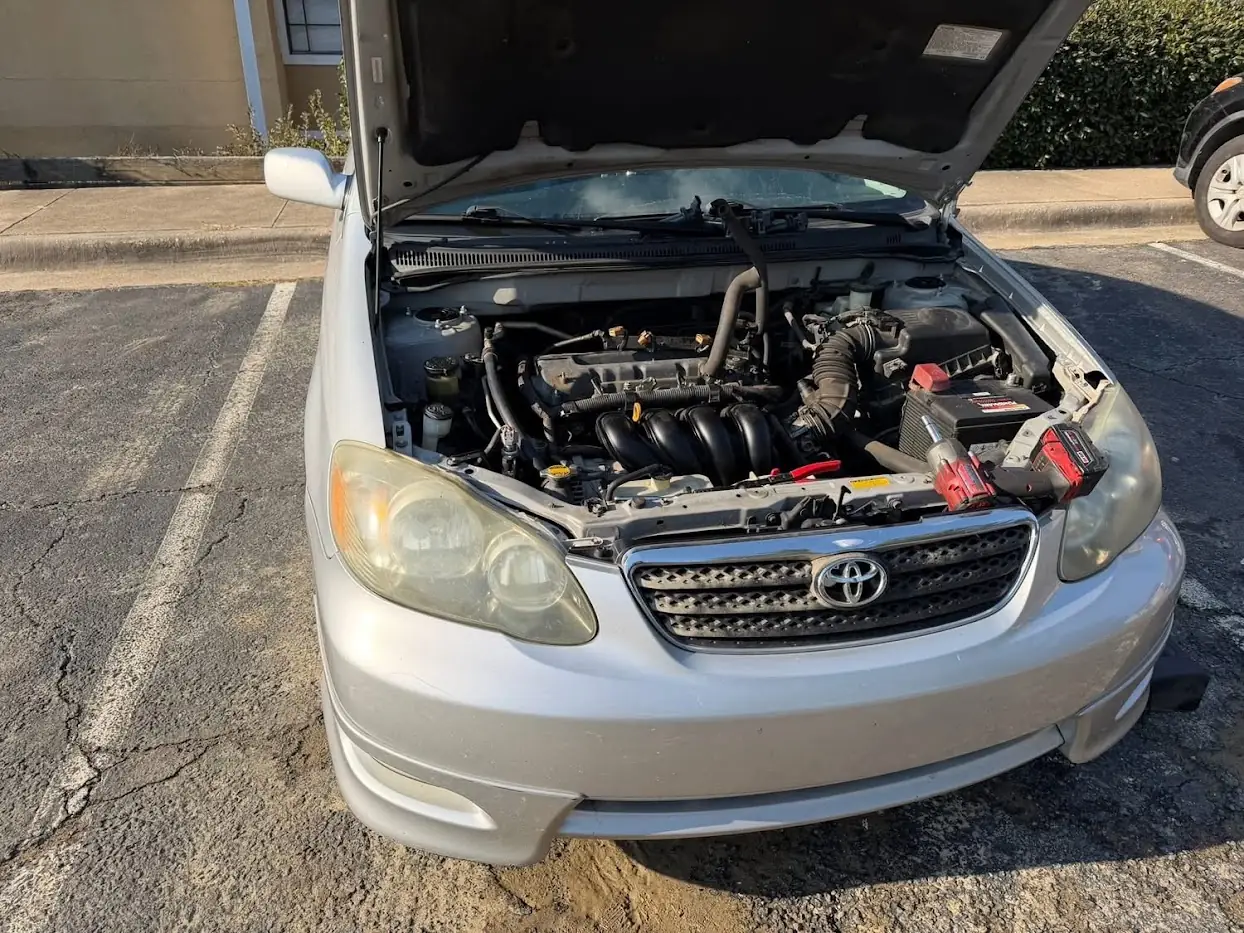
Then the parts get checked by hand. On our suspension and steering jobs, we check the ball joints, tie rods, bushings and shocks for play, cracks or leaks. MOTOR also lists engine mounts and the belt driven parts, like an A/C clutch, for a shake that follows engine speed.
When to Pull Over
A steady buzz in the wheel at 65 is a warning. A shake that gets worse fast is a stop.
Pull over somewhere safe if the shake grows by the mile, comes with a clunk or a pull, or started right after someone had your wheels off. Loose lug nuts are the one cause on the list that can take a wheel off the car, per Continental. Check the tires for a bulge before you get back on the road.
If you hit a hole hard enough to feel it in your teeth, the Tulsa pothole check covers what to look at and how the city handles claims.
Shake in the wheel and don’t want to drive it across town? Call or text Loyd at (918) 215-1206. We come to where it’s parked and check the suspension and steering, or pull the codes if it’s the engine.
Mailbag
Why would my car shake at 70 mph?
Most often a tire or wheel that’s out of balance, out of round or bent. Barry’s Tire Tech says suspensions are built so wheel hop lands around 50 to 70 mph, so small tire problems show up loudest there.
Is it safe to drive my car if it shakes?
A mild, steady shake at one speed can usually make it to a check. A shake that keeps growing, comes with a clunk, or started after tire work is a pull over now. Loose lug nuts can let a wheel come off.
Can a bad alignment cause shaking?
Not much on its own. Misalignment shows up as a pull and as uneven tread wear. A tire worn unevenly for long enough can go out of round and shake, so the alignment and the tires often get fixed together.
Can bad shocks cause shaking at high speeds?
I think worn shocks are more often the reason a shake feels worse than the reason it started. Barry says an imbalance in the 50 to 70 mph band can start a shake the car doesn’t damp out. Fix the balance first, then check the shocks if it’s still there.
Why does my car shake only when I accelerate?
Vehicle Service Pros links a shake under acceleration to a worn inner axle joint. Rule out the engine and transmission mounts first, since they can feel the same.
Why did my car start shaking after new tires?
Check the lug nuts first. Continental calls for a torque check after the first 50 kilometers. After that, a wheel not seated right, a missed weight or a bent rim that the old tires hid are the usual suspects.
Also See
Suspension and steering repair in Tulsa
Engine diagnostics where your car is parked
How to check your car after a Tulsa pothole
Questions we get asked
Wheel shaking on the BA, the Creek or I-44? Call or text Loyd at (918) 215-1206. We come to you in Tulsa, Sapulpa, Kiefer, Sand Springs, Jenks, Kellyville, Glenpool and Lotsee.
Receipts
TRIP, Oklahoma Transportation by the Numbers, Tulsa News Release, April 22, 2025
AAA Newsroom, Potholes Pack a Punch, March 1, 2022
MOTOR Magazine, Fixing Vexing Vibrations, March 2018
Barry’s Tire Tech, Vibration, Balance, Runout and Uniformity, November 14, 2025
Jerry Stewart, Noise Vibration and Harshness, Gears Magazine, January 15, 2026
Mike Mavrigian, CV Joint Tech, Vehicle Service Pros, February 10, 2022
Continental, Retorquing Wheels