By Loyd Pearson, Loyd’s Mobile Mechanic. Posted November 6, 2026. Updated November 6, 2026.
Author Source EEAT Authors · Loyd's Author Page
Oklahoma has no state brake check, so no rule says what a brake inspection has to include. Pennsylvania’s code makes the inspector pull at least one front wheel and one opposite rear wheel. In Tulsa, the same two words can mean a glance through the rim or the wheels on the ground.
A full inspection starts at the pedal and ends at the wheels. It should leave you with numbers you can read, not just the word “fine.”
Where It Lands
A brake inspection works in seven steps. Road test and warning lights, pedal feel, fluid and master cylinder, wheels off, pads, rotors or drums, then calipers, hoses, lines and the parking brake. The part most people never see is the inner pad, since it can wear out while the outer pad still looks good from the curb. Oklahoma law still expects brakes in good working order, but nobody tests them for you. So ask which kind of check you’re getting, and get the readings on paper.
- Oklahoma ended its yearly car inspection in 2001. Its brake law stayed on the books.
- State law says a passenger car must be able to stop from 20 mph within 20 feet, and within 54 feet on the parking brake alone.
- No single pad number fits every car. Nissan’s line is 2 mm. Pennsylvania fails a bonded pad under 2/32 inch.
- Rotors carry their own limit, marked MIN TH on the metal.
- Federal minimums let DOT 3 fluid boil at 401°F when dry and 284°F after a moisture soak.
Want more Tulsa car guides near the top of your Google results? Pick us as a source and they show up first.
Add Loyd’s Mobile Mechanic as a preferred source on GoogleWhy Oklahoma Leaves This Up to You
The sticker went away. The law didn’t.
The yearly inspection ended under a 2001 repeal, as I covered in what Oklahoma still checks on a car. But Title 47, Section 12-301 still says all brakes must be kept in good working order and adjusted to work about equally on both sides of the car. Section 12-302 sets the test. For a passenger car, that’s 20 mph down to a stop within 20 feet, measured from when your foot starts to move the pedal, on a hard, level, dry surface. On the parking brake alone, the limit is 54 feet.
Nobody runs that test at the tag agency. Pennsylvania shows what it looks like when a state does write the steps down.
| Item | Pennsylvania Yearly Inspection | Oklahoma |
|---|---|---|
| Wheels off | At least one front and one opposite rear | No inspection, so no rule |
| Pad limit | Bonded lining fails under 2/32 inch | Your car maker’s number |
| Rotor limit | Fails under the stamped minimum, or if scored deeper than .015 inch | Your car maker’s number |
| Pedal | Fails if travel passes 80 percent of what’s available | Good working order, per the statute |
| Road test | Must stop within the state table and stay in a 12 foot lane | The 20 foot rule exists, and you’re the only one checking |
I’m not saying we need the sticker back. I am saying a Tulsa driver has to ask for what a Pennsylvania driver gets by law.
The Seven Steps of a Full Brake Inspection
Shops word this a little differently. ADVICS, a brake parts maker, publishes a 15 point list, and Wagner publishes a five section one. They land on the same parts.
1. Road test and warning lights. Noise, shake or a smell under braking all count, per ADVICS. Does the car pull? Are the BRAKE or ABS lights on? This step tells the tech where to look first.
2. The pedal. It should move smooth and stay firm. A pedal that sinks or feels soft points at the fluid side, not the pads. With the engine off, pump the pedal until it goes hard. Hold it and start the engine. A slight drop means the booster is doing its job.
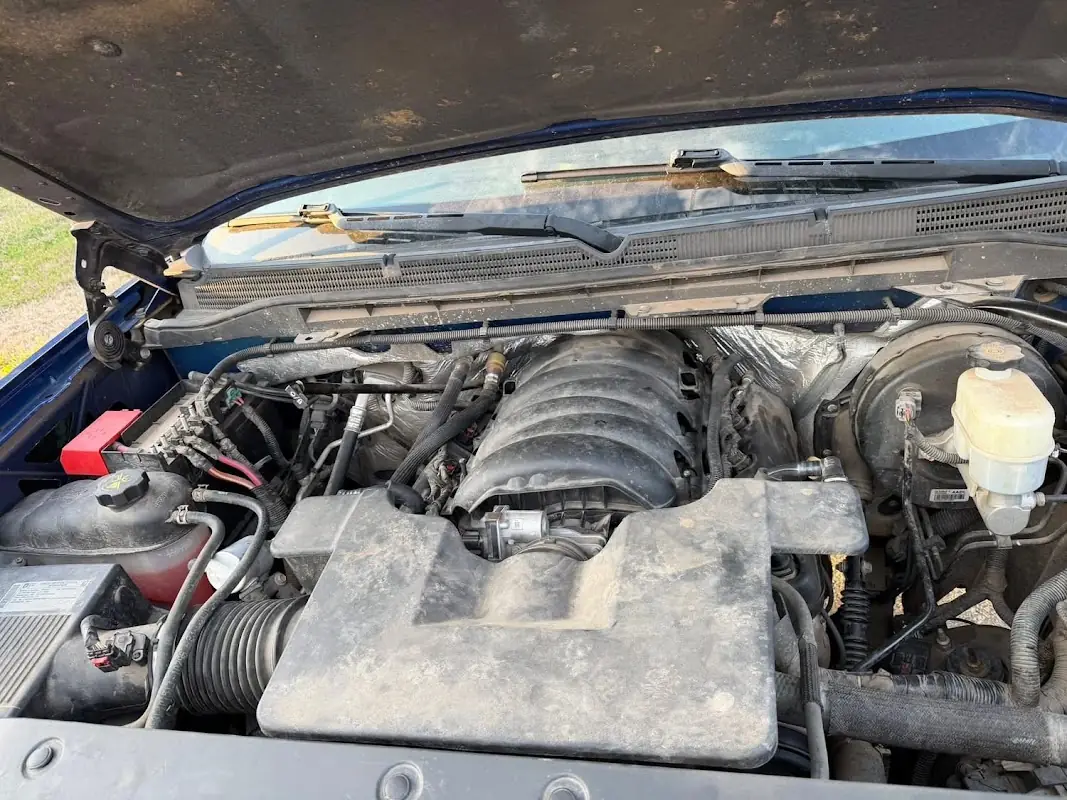
3. Fluid and master cylinder. Wagner starts here. The level goes between the min and max lines, and the tech looks for leaks around the master cylinder. ADVICS says fluid should be light in color, and very dark fluid should be replaced. Wagner adds that contaminants settle in the caliper and can seize the piston.
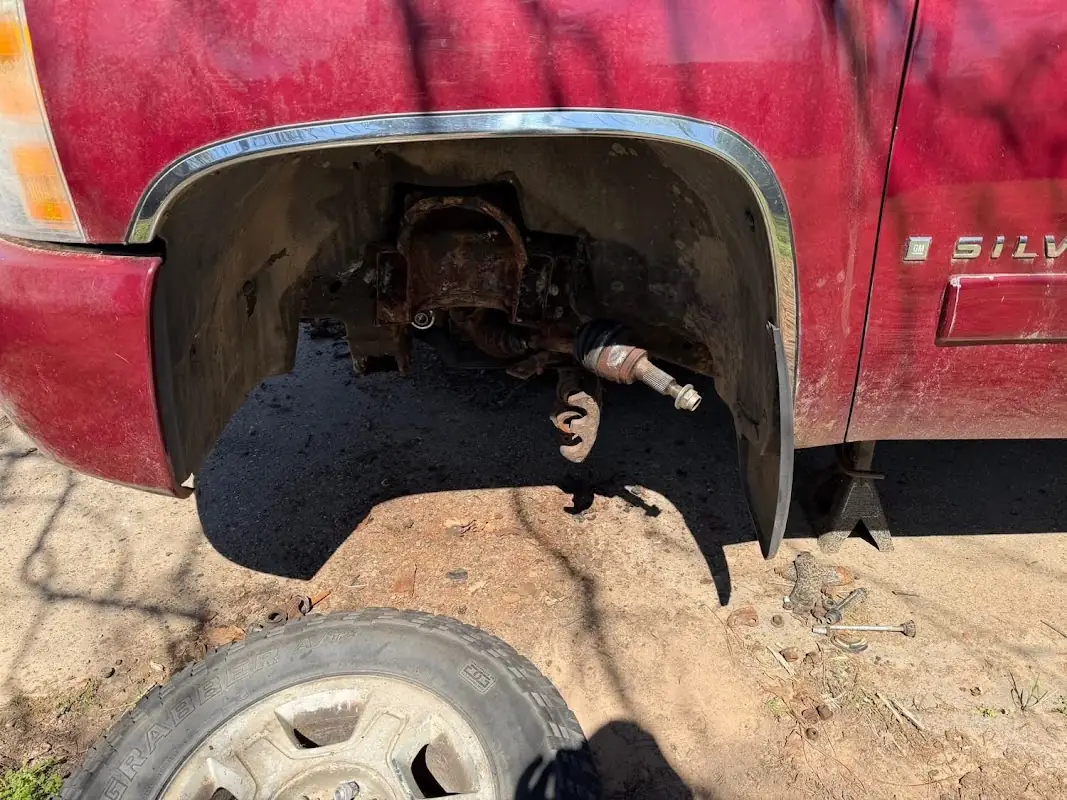
4. Wheels off. This is the line between a look and an inspection. It also gives a clear view of the tire and rim, and ADVICS puts those on the list too. On our brake jobs, we pull the wheels before we say what the car needs.
5. Pads. Both pads on each side, inner and outer. Wagner says they should wear at about the same rate. ADVICS gives a good key for reading them. Tapered wear can mean worn caliper hardware. One pad worn more can mean a caliper or piston hanging up. Grooves can point to the rotor, chips to too much heat, and a step in the lining to a pad that isn’t lined up right.
6. Rotors or drums. HELLA says the minimum thickness is marked MIN TH on the outer edge of the disc or on its hub area, and it’s checked with a brake disc gauge. Nissan says that limit is typically 2 to 3 mm below new. So there isn’t much metal to spend. Drums get a look too, since some cars still run them on the back.
7. Calipers, hoses, lines and the parking brake. Wagner has the tech check the caliper boots for damage and make sure the slide pin moves freely. Pennsylvania’s list for hoses and lines is a good one to borrow. Leaks, flat spots, loose mounts and showing cords all fail. Last, the parking brake has to set and hold, which is the part Oklahoma’s 54 foot figure is about.
What a Quick Look Can and Can’t See
A free check isn’t a scam. It’s a screen.
Looking through the spokes can show you the outer pad and part of the rotor face. It can’t show the inner pad, the back of the rotor or a slide pin that’s stuck. Those are the exact spots Wagner says to compare when wear is uneven. A seized piston or a blocked hose can burn through one pad while its partner looks healthy.
So a clean result from the curb means the part they could see looked okay. It doesn’t mean your brakes passed. Before anyone starts, ask three things.
Are the wheels coming off? If so, ask which ones. Pennsylvania settles for two. I’d want all four if the car has a noise, a pull or a soft pedal.
What does it cost if I don’t buy the repair? The FTC notes many shops charge for diagnostic time, and says to ask about the fee if you take the work elsewhere.
Will I get the readings? If the answer is no, you’re getting an opinion, not a measurement.
The Readings Worth Getting on Paper
Four things. All of them fit on one line each.
Pad thickness at each wheel, inner and outer. You’ll see 3 mm quoted online as a universal line. It isn’t one. Nissan says its wear indicators make noise at around 2 mm and to replace pads at or before that. Pennsylvania’s fail point for a bonded lining, 2/32 inch, is about 1.6 mm. Ask what your car’s maker says, and how many miles you likely have left.
Rotor thickness next to the MIN TH number. A worn rotor and a rotor that’s under its limit are two different findings. Have the shop show you both numbers. If they’re selling you rotors, they should know how close yours are.
Fluid condition. Color is a rough guide, and moisture is the real issue. Brake fluid pulls it in from the air, and that drops the boiling point. The federal standard shows how far.
The wet test soaks the fluid until a reference fluid in the same chamber reaches 3.70 percent water. Hard stops on old fluid can boil it, and that’s when a pedal goes soft right when you need it.
Any leak, and where it is. A wet hose, a damp caliper boot or a stain under the master cylinder. Ask for a photo.
When the check turns into a repair, the FTC says the written estimate should name the condition to fix, the parts and the labor. Ask the shop to call you before it goes past a set amount.
Where Tulsa Salt Fits In
Timing counts here, and our winter is why.
The City of Tulsa said in October 2024 that its crews had 36 routes totaling about 1,770 lane miles, about 8,000 tons of salt and 40,000 gallons of brine ready for the season. Salt and brine turn into a wet film on the road, and your brakes sit right in the spray.
Wagner’s checklist has the tech pull the abutment clips and clean the rust from under them, because that rust can make a pad bind and wear unevenly. A pad that can’t slide is a pad that stays pressed against the rotor. That’s the kind of problem a curbside look won’t catch.
So I’d pick two times to get a look. Once before the first freeze, along with the rest of the Tulsa winter car checklist. Once in the spring, after the salt is done. If you hit a bad one on the way, the pothole check covers the wheel and tire side.
Want the wheels off and a straight read on what’s left? Call or text Loyd at (918) 215-1206. We do brake service where the car is parked, and you hear what’s wrong and what it costs before any work starts.
Mailbag
How do brake inspections work?
A tech road tests the car, checks the pedal, looks at the fluid and master cylinder, then pulls the wheels. From there it’s pads, rotors or drums, calipers, hoses, lines and the parking brake. You should leave with readings, not just a yes or no.
How long does a brake inspection take?
Midas says a standalone inspection usually takes under 30 minutes. More wheels off means more time, so ask how many are coming off when you ask how long.
Is it free to get my brakes checked?
Sometimes. Some shops and dealers advertise one, like the complimentary check at participating Nissan dealers. Ask what it covers and whether the wheels come off. For a visit from us, call (918) 215-1206 and ask.
What is the 7 step brake check?
No rule I could find sets one. People use the phrase for a full check like the seven steps above, but lists run from five sections at Wagner to 15 points at ADVICS and 55 at Midas. Judge a check by what it measures, not by the count.
How often should brakes be inspected?
Midas gives once a year or every 10,000 to 12,000 miles as a common interval, and says to check your owner’s manual. Go sooner if you notice a noise, a pull or a soft pedal.
Do they check your brakes during a car inspection in Oklahoma?
Oklahoma has no yearly car inspection, so no. The one place brakes come up is the short equipment list for a drive test, which says they must be in proper working order.
Can a mobile mechanic inspect my brakes in my driveway?
Yes. We check brakes at your home, your work or wherever the car is parked in the Tulsa area. If the pedal is soft or the car is grinding, that beats driving it across town.
Also See
Brake service at your home or work in Tulsa
Suspension and steering repair
What Oklahoma still checks on a car
Questions we get asked
A squeal, a pull or a pedal that feels wrong? Call or text Loyd at (918) 215-1206. We come to you in Tulsa, Sapulpa, Kiefer, Sand Springs, Jenks, Kellyville, Glenpool and Lotsee.
Receipts
Oklahoma Statutes, Title 47, Sections 12-301 and 12-302, posted by the Oklahoma Senate
Pennsylvania Code, Title 67, Section 175.80, Inspection Procedure
PennDOT, Safety Inspection Program FAQs
49 CFR 571.116, Federal Motor Vehicle Safety Standard 116, Brake Fluids, via Cornell Law School
Wagner Brake, Brake System Inspection Checklist
ADVICS, Brake System Inspection Checklist, updated June 13, 2023
HELLA Tech World, Testing the Minimum Thickness of a Brake Disc
Nissan USA, Brake Service and Maintenance
Midas, Brake Inspection
Federal Trade Commission, Auto Repair Basics
City of Tulsa, Prepared for Winter Weather Ahead of 2024 to 2025 Winter Season, October 31, 2024
Service Oklahoma, Vehicle Inspection Checklist