By Loyd Pearson, Loyd’s Mobile Mechanic. Posted November 25, 2026. Updated November 25, 2026.
Author Source EEAT Authors · Loyd's Author Page
Some of Tulsa’s tap water is hard, and that matters more to your heater than you’d think. The bad heater core symptoms to watch for are a sweet smell in the cabin, an oily film on the windshield, damp carpet, a coolant level that keeps dropping, and heat that’s weak or works on one side only. Tap water in the coolant is one of the things that gets you there.
The City of Tulsa says water from its A.B. Jewell plant averages 140 parts per million of hardness, and its own chart rates that as hard. The heater core has some of the thinnest tubes in the whole cooling system. That’s where loose mineral deposits get stuck.
But weak heat alone doesn’t prove the core is bad. A stuck thermostat, low coolant or a broken blend door can do the same thing for a lot less money.
Where It Lands
A leaking heater core announces itself inside the car, with a sweet smell, greasy fog on the glass and wet carpet. A clogged one just gives you weak heat, often hot on one side and cold on the other. A stuck open thermostat keeps the gauge low. A bad blend door leaves the heater hoses hot while the vents blow cool. Check the coolant level on a cold engine, compare the vent temperatures and compare the two heater hoses before anybody takes the dash apart.
- RepairPal’s September 2026 estimate puts a heater core replacement at $1,375 to $1,912 before tax. Labor is $886 to $1,300 of that.
- Honda’s fix for a cold driver’s side on the 2012 to 2014 CR-V was a flush. It pays 1.1 hours of labor and leaves the dash alone.
- NHTSA’s complaint file holds 128 complaints from 2021 through 2025 that mention a heater core. At least 33 describe one side warm and the other cold, and at least 42 describe glass that wouldn’t clear.
- Tulsa averages about 72 days a year at or below 32 degrees, so a car with no defrost is a safety problem here.
- Plain water isn’t the fix. Mix coolant with distilled water, not the garden hose.
Want more Tulsa car guides near the top of your Google results? Pick us as a source and they show up first.
Add Loyd’s Mobile Mechanic as a preferred source on GoogleWhat the Heater Core Does
It’s a small radiator behind your dash.
The water pump sends hot coolant from the engine through two heater hoses and into the core. The blower fan pushes cabin air across the hot fins. That warm air goes to your feet, your face and the windshield.
So the heater borrows its heat from the engine. If the engine isn’t hot, or the coolant is low, or the coolant can’t flow, the vents go cool. That’s why a heater complaint is really a cooling system complaint until somebody proves otherwise.
RepairPal points out one more thing that makes this part odd. It’s about the only part on the car that can leak its coolant inside with you. Everything else drips on the driveway.
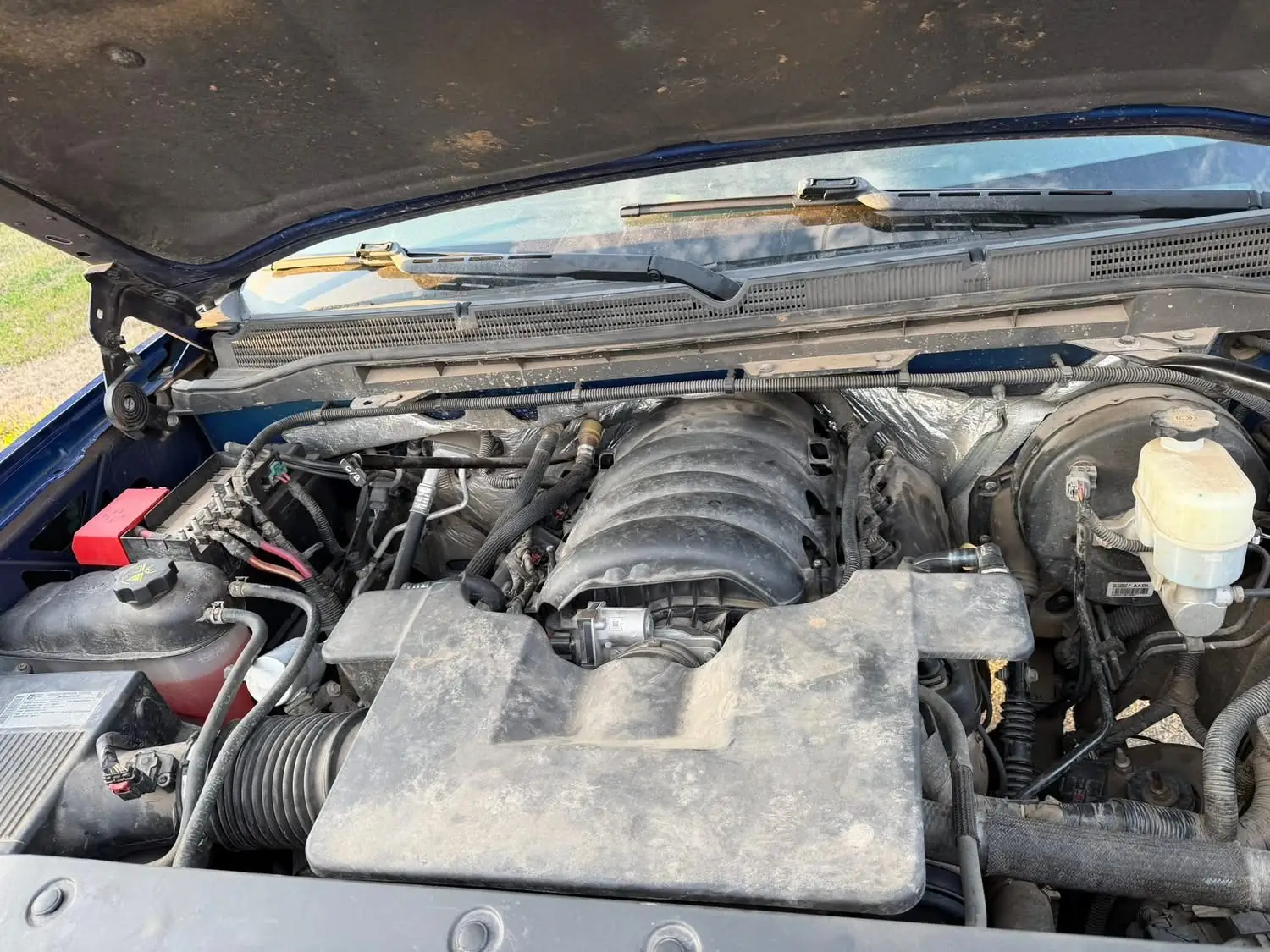
Leak, Clog or Something Else
Sort the symptoms first. It saves you from paying for a dash job you don’t need.
| What You Notice | Points To | Check This Next |
|---|---|---|
| Sweet smell from the vents | A leaking heater core, even a pinhole | Coolant level on a cold engine |
| Greasy film or fog inside the windshield | A leaking core putting coolant mist on the glass | Wipe the glass and feel for oil |
| Damp or sticky front carpet | A leaking core or its hose connections | Is it clear water or colored and slick? |
| Coolant drops, no drip outside | A core leak, or a leak inside the engine | Carpet, smell, then a pressure test |
| One side hot, the other side cold | A partly clogged core, or one blend door | Vent temperatures, then the door motors |
| Warm on the highway, cool at idle | Low coolant, trapped air or a restricted core | Coolant level and air in the system |
| Gauge stays low, heat never builds | A thermostat stuck open | Gauge reading after a full warm up |
| Heater hoses hot, vents still cool | A blend door or its motor | Clicking behind the dash |
| Little or no air from any vent | Blower motor, fuse or cabin filter | Fan speeds and the filter |
One of those rows gets misread all winter. Plain fog that wipes off clean is just moisture in the cabin. Fog from a heater core leaves a film that smears. RepairPal describes it as a mist that coats the windows and is hard to wash off.
What 128 Federal Complaints Say
Drivers report safety problems to NHTSA, and the agency posts them in a public file. The November 2026 download has 128 complaints received from 2021 through 2025 where the owner wrote the words heater core.
Two patterns stand out. At least 33 of the 128 describe heat that works on one side and not the other, and at least 42 describe glass that fogged, frosted or wouldn’t defrost.
They cluster the way you’d expect. 70 of the 128 reached NHTSA in November, December, January or February. Volkswagen owners filed 30 of them, and 21 of those were Passats. Ford had 17, Dodge 15, Ram 14 and Honda 9.
None of the 128 lists a crash, and only one came from Oklahoma. A complaint isn’t proof of a defect either, and some of these owners turned out to have a different problem. But it does tell you what this failure looks like from the driver’s seat. It looks like a windshield you can’t see through.
Two Carmakers Put the One Side Clue in Writing
Honda’s Service Bulletin 14-063 covers the 2012 to 2014 CR-V, with a VIN limit on the 2012s. The complaint is low heat from the driver’s side vent. Honda says the heater core may be partly clogged.
The steps are worth stealing, because they show the right order. The tech warms the engine until the cooling fans cycle twice, sets the heat to max and puts a thermometer in both front vents. A gap under 10 degrees is normal. Over 10 degrees, the tech tests the air mix motors before touching the core. If the motors pass, the core gets a flush, and Honda lists 1.1 hours for the job.
No new core. No dash on the garage floor.
Volkswagen had it worse. Its bulletin for the 2013 and 2014 Passat TDI diesel says flux and aluminum rust restricted the core and left the passenger side short on heat. VW stretched the heater core warranty on those cars to 10 years or 120,000 miles, a clock that has run out on nearly all of them by now. The bulletin warns that replacing only the core lets the trouble come back, so the dirty coolant has to come out too.
And sometimes the core isn’t the bad part at all. NHTSA recall 13V177 covers certain 2013 Ram 1500 trucks with a coolant valve that could stick and starve the heater core. The recall says that breaks the federal windshield defrosting standard. If you own one, run the VIN before you pay for anything.
Five Checks to Do Before You Pay for a Dash Job
You can do the first four in the driveway. No tools past a cheap thermometer.
1. Read the coolant on a cold engine. Let the car sit overnight. The level in the tank should be between the marks. Never open the cap hot, because the system is under pressure and it will burn you. Low coolant is the cheapest reason for a weak heater, and the reason it’s low is the part that matters.
2. Watch the gauge. Drive 15 minutes. If the needle never reaches its normal spot, suspect a thermostat stuck open. RepairPal says that can also turn on the check engine light.
3. Swing the temperature. With the engine warm, run the A/C on full cold, then go to full hot. The change should be fast and obvious. Then try floor, vent and defrost. RepairPal says if some settings work and others don’t, you’re likely looking at a blend door or vent problem.
4. Compare both sides. Set both sides to max heat and hold a thermometer in each front vent. The 10 degree line is Honda’s number for the CR-V, so use it as a clue on other cars, not a verdict.
5. Compare the heater hoses. This is the one that tells a clog from a door. ALLDATA says both hoses at the core should be equally hot. If the return hose is cooler, or cold, the core is partly or fully clogged. If both are hot and the vents aren’t, look at the blend door. The hoses sit close to belts, fans and hot metal, so an infrared thermometer beats a bare hand. If you can’t reach them safely, leave this one to a mechanic.
If the check engine light is on as well, our engine diagnostics in Tulsa page shows how we track it down. A thermostat code can explain the cold vents by itself.
Sweet smell, foggy glass or one side blowing cold? Call or text Loyd at (918) 215-1206. We come to you in Tulsa, check the coolant, the hoses and the blend door, and tell you what we found before any work starts.
Flush First, Then Talk About Replacing It
This is where the money is. A new heater core is cheap. Getting to it isn’t.
RepairPal says the dashboard has to come out in most cases. Its estimates updated September 3, 2026 run $1,375 to $1,912 on average, $1,532 to $2,018 for a Ford F-150 and $1,234 to $2,020 for a Toyota Camry. Those are national numbers before tax, not my quote. eBay Motors puts the part at $50 to $150 and the job at about eight to 16 hours.
So if the core is clogged and not leaking, a flush deserves the first shot. ALLDATA says flush guns that push water and shop air through the core usually clear it, and that flushing can save the customer a high labor bill. It also gives a fair warning. A flush can open up a leak the clog was hiding.
A leaking core is different. Flushing won’t help it. RepairPal calls stop leak a temporary fix at best that can cause other problems, and I’d skip it, since it’s made to plug small holes and a heater core is nothing but small holes.
When we look at a heat complaint, we check the coolant level, the hoses, the heater core, the blend door, the blower motor and the cabin filter. A core replacement is a big, involved job, so we want to be sure it’s needed before going that way. You can read the whole process on our heating and A/C repair page.
You’ll hear about the bypass too. That’s where the two heater hoses get joined together so coolant skips the core. RepairPal says it usually stops the leak but leaves you with no heat and no defroster, and it doesn’t recommend it in winter. Tulsa averages 18.3 days at or below 32 degrees in December and 21.5 in January, by the National Weather Service normals. Save the bypass for June.
Can You Drive With a Bad Heater Core?
A small clog, yes. A leak, not for long.
With a clog, the question is the windshield. If it won’t clear, don’t go. A cold car is miserable, but a fogged one is dangerous.
With a leak, there are two clocks running. The coolant keeps dropping, and RepairPal warns that an engine run low on coolant can overheat and be ruined. The other clock is you. RepairPal says breathing the mist is harmful and tells drivers to roll the windows down and get it repaired right away.
Coolant on the carpet needs cleaning up, not just drying. Ethylene glycol is the chemical in a lot of antifreeze. The federal toxic substances agency, ATSDR, says it tastes sweet and is brightly colored, and that swallowing a larger amount can cause serious illness or death. Keep kids out of that footwell.
If the gauge climbs toward hot, pull over and shut it off. Don’t try to make it across town.
Keep the New One From Clogging
Most heater core trouble starts as old coolant. RepairPal says the core’s narrow passages make it one of the first parts hurt by rust, dirt and worn out additives.
Three habits cover it. Change the coolant on the schedule in your owner’s manual. Use the type the manual names, because Tires Plus warns that mixed types can form a gel. And keep tap water out.
That last one is the Tulsa part. FenderBender, a collision repair trade magazine, explains that the calcium and magnesium in tap water form deposits, and that loose deposits can clog radiator and heater core tubes. It says the only way around it is distilled water, which is already in premixed coolant. VW’s bulletin calls for a 50/50 mix with distilled water as well.
The city lists its other plant, Mohawk, at 89 parts per million. That’s softer, but the city still rates that range as moderately hard.
In a pinch on the shoulder of I-44, water beats cooking the engine. Just get it drained and refilled right afterward, before the next hard freeze. Our Tulsa winter car checklist covers how cold your coolant should be good for.
Mailbag
What are the symptoms of a bad heater core?
A leaking one gives you a sweet smell, an oily film on the windshield, damp front carpet and a coolant level that keeps falling. A clogged one gives you weak heat, heat on one side only, or a slow defroster.
How do I know if it’s my heater core or my thermostat?
Watch the gauge. A thermostat stuck open keeps the engine too cool, so the needle stays low and everything warms up slowly. With a clogged core the gauge reads normal and the vents stay cool anyway.
Why does my heater only work when I press the gas?
At idle the water pump turns slowly. If the coolant is low, there’s air trapped in the system or the core is restricted, not enough hot coolant gets through until the engine speeds up. Check the level on a cold engine first.
Does low coolant affect the heater?
Yes. RepairPal says a low level can keep enough hot coolant from reaching the core. Topping it off may bring the heat back, but coolant doesn’t vanish. Find where it went.
Can a heater core be flushed and not replaced?
Often, if it’s clogged and not leaking. Honda’s own fix for the 2012 to 2014 CR-V is a flush. A core that leaks has to be replaced.
Where is the heater core located?
Behind the dashboard, in the heater box. On most cars sold here it sits toward the passenger side, per Tires Plus, so that’s the carpet to feel first.
Will a bad heater core make the car overheat?
It can. A leak drains the coolant the engine needs. If the gauge climbs, stop and shut the engine off.
Also See
Heating and A/C repair in Tulsa
Engine diagnostics that come to you
Winter checks for Tulsa drivers
Schedule a visit
Want to know which part it is before the next freeze? Call or text Loyd at (918) 215-1206. We come to you in Tulsa, Sapulpa, Kiefer, Sand Springs, Jenks, Kellyville, Glenpool and Lotsee.
Receipts
NHTSA, Consumer Complaints Flat File, November 2026 download, counted by complaint number and date received
NHTSA, Recalls Flat File, campaign 13V177
Honda, Service Bulletin 14-063, Low Heat From the Driver’s Side Vent, November 1, 2014
Volkswagen, Technical Bulletin 2040580, Heater Core Restricted, November 12, 2019
Volkswagen, VWP-16-05, Heater Core Limited Warranty Extension, June 14, 2016
City of Tulsa, FAQs About Water
City of Tulsa, Water Quality and the Hardness Chart
National Weather Service Tulsa, Climate Normals
ALLDATA, Remedying Lack of Cabin Heat, January 6, 2026
FenderBender, Proper Coolant Use Is a Chemical Balancing Act, January 1, 2020
ATSDR, Ethylene Glycol ToxFAQs, June 2013
RepairPal, Symptoms of a Bad or Failing Heater Core
RepairPal, Heater Blowing Cold Air, February 12, 2019
RepairPal, Heater Core Replacement Cost, updated September 3, 2026
RepairPal, Ford F-150 Heater Core Replacement Cost, updated September 3, 2026
RepairPal, Toyota Camry Heater Core Replacement Cost, updated September 3, 2026
eBay Motors, Diagnosing a Bad Heater Core, January 12, 2026
Tires Plus, Clogged or Leaking Heater Core, June 17, 2026